

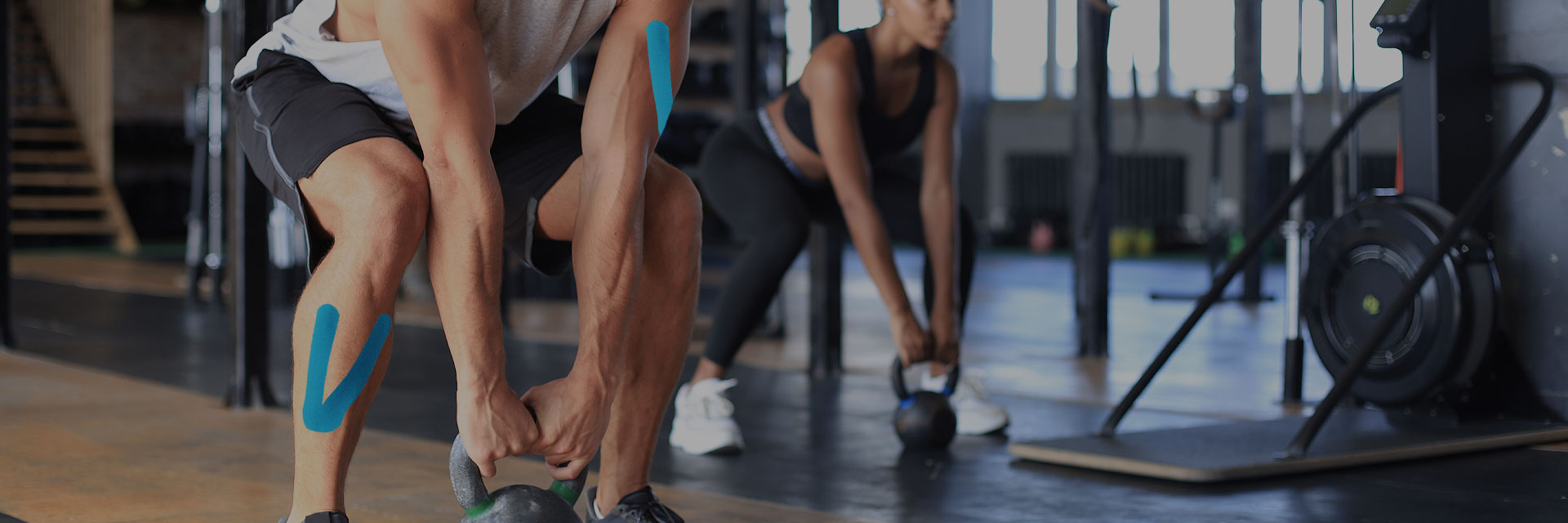
Sourcing medical tape from overseas is not simply a matter of comparing unit prices. Buyers — whether hospital distributors, sports medicine brands, pharmacy chains, or private-label startups — need a partner who understands adhesive chemistry, regulatory classification, converting tolerances, and supply chain reliability at the same time.
1. Who We Are: Experience Behind the Product
FULUO Medical has operated as a dedicated medical adhesive converting factory since 2007, focusing on three connected product families: medical roll materials, sports and kinesiology tape, and wound care dressings. Rather than trading finished goods sourced from third parties, we run the coating, laminating, slitting, and die-cutting lines ourselves, which is what allows us to speak to manufacturing detail rather than marketing generalities.
| Metric | Detail |
|---|---|
| Founded | 2007, Zhejiang Province, China |
| Factory area | Approximately 20,000 m² |
| Workforce | Around 160 employees, including a dedicated QC team |
| Coating output | Roughly 4 million m² of adhesive-coated material per year |
| Product lines developed | 100+ finished and semi-finished tape/dressing formats for medical and sports use |
| Export focus | Long-standing presence in the Japanese market alongside broader global distribution |
Figures above reflect company-reported operating data; current details are maintained on our About Us and Manufacturing Ability pages.
2. What a Medical Tape Actually Is
Under the U.S. FDA's device regulation, a medical adhesive tape or bandage is defined as a strip of fabric or plastic material coated on one side with an adhesive, used to cover and protect wounds, hold together skin edges, support an injured body part, or secure objects to the skin, and it is classified as a low-risk Class I general-controls device (21 CFR §880.5240). Structurally, nearly every medical tape is built from three layers working together, not a single "adhesive sheet":
| Layer | Function | Common materials |
|---|---|---|
| Backing / substrate | Provides mechanical strength, conformability, breathability and printability | Non-woven fabric, cotton cloth, PE film, PU film, rayon, zinc oxide cloth, silk cloth |
| Adhesive coating | Bonds the tape to skin or a secondary surface at a controlled tack and peel force | Acrylic, rubber-based, silicone, or hot-melt adhesive systems |
| Release liner | Protects the adhesive during storage and is removed before application | Silicone-coated paper or PE film |
3. Adhesive Chemistry: Choosing the Right System
The single biggest factor separating a "generic" tape from a fit-for-purpose one is adhesive selection. Each chemistry has a distinct tack profile, wear time, and skin-interaction behavior. Clinical literature on medical adhesive-related skin injury (MARSI) has shown that acrylate adhesives tend to build higher adhesion over time, which improves security but can raise the risk of skin trauma on fragile skin, while silicone adhesives hold a more stable, gentler adhesion suited to repeated removal, though they can be less reliable for securing tubing or catheters under tension. This is why serious manufacturers offer more than one adhesive family rather than a single formulation for every use case.
| Adhesive type | Initial tack | Wear time | Typical use |
|---|---|---|---|
| Acrylic | Medium | Long (multi-day) | General fixation, IV securement, kinesiology tape |
| Rubber-based | High | Short–medium | Zinc oxide sports tape, rigid strapping tape |
| Silicone | Low–medium, stable over time | Medium–long, gentle removal | Sensitive/fragile skin, neonatal and geriatric care, scar dressings |
| Hot-melt | Medium–high | Short–medium | Cost-sensitive first-aid and general-purpose tape |
We formulate and coat all four adhesive families in-house, which lets OEM customers select a chemistry based on the clinical or athletic use case rather than being limited to whatever a trading company happens to have in stock. More background on our coating process is available on our medical-grade adhesive coating guide and our adhesive components technical guide.
4. From Jumbo Roll to Finished Product: The Manufacturing Process
Producing medical tape at scale involves a sequence of precision converting steps. Each stage has its own tolerance requirements, and a defect introduced early (for example, uneven coat weight) cannot be corrected later.
| Stage | What happens | Key control point |
|---|---|---|
| Adhesive coating | Adhesive is metered and applied to the backing or liner via knife-over-roll or gravure coating | Coat weight uniformity (g/m²), oven drying temperature |
| Laminating | The coated adhesive is laminated to the backing or a release liner is applied | Bond strength, air-bubble elimination |
| Curing/aging | Rolls rest under controlled temperature/humidity to let adhesive properties stabilize | Aging time, storage climate |
| Slitting & rewinding | The jumbo roll is cut to specified widths and rewound onto cores | Width tolerance, edge quality, roll tension |
| Die-cutting / kiss-cutting | Finished shapes (strips, patches, precut kinesiology tape) are cut without cutting through the liner | Cutting depth, registration accuracy for printed designs |
| Sterilization (where applicable) | EO or gamma sterilization for wound dressings requiring a sterile barrier | Validated sterilization cycle, residual EO testing |
| Packaging | Individual wrap, pouch sealing, carton packing and labeling per customer artwork | Seal integrity, label accuracy, UDI/barcode placement |
Details on our converting equipment and floor layout are documented on the Manufacturing Ability page, and our approach to device labeling compliance is covered in our UDI marking capability article.
5. Our Product Range
Rather than a single generic tape, we manufacture across roll-material and finished-product categories so OEM customers can source both semi-finished inputs for their own converting lines and ready-to-sell retail products from one factory.
- Kinesiology tape jumbo rolls — cotton/rayon elastic fabric with acrylic adhesive for downstream cutting and printing
- Rigid sports tape jumbo rolls — zinc oxide and cotton-based strapping tape for joint stabilization
- Elastic adhesive fabric rolls — for bandages and compression applications
- PU film adhesive rolls — waterproof, breathable polyurethane film for wound and IV dressings
- PE foam electrode rolls — used in TENS and ECG electrode manufacturing
- Non-woven adhesive rolls — breathable substrates for general fixation tape
- Medical fixation tapes — finished, retail-ready fixation and plaster tape
- Wound care dressings — foam, film, hydrocolloid and non-woven dressings
For a full catalog structure, see our Products and Medical Roll Materials hub pages.
6. How Our OEM and Private Label Program Works
"OEM" and "private label" are often used loosely, so it is worth separating the two before describing our process. In an OEM arrangement, we manufacture to a customer's technical specification — a particular adhesive, backing, width, or performance target — and the resulting product may carry the customer's brand. In a private label arrangement, the customer selects from our existing product formulations and applies their own branding and packaging without requesting a new formulation. Most buyers use a mix of both across their catalog. Full scope is outlined on our OEM & Customization page.
| Step | Activity | Typical duration |
|---|---|---|
| 1. Specification review | Adhesive type, backing, width, length, sterility, packaging and labeling requirements confirmed | 1–3 days |
| 2. Sample development | Lab or pilot-line samples produced for approval, including custom print/color matching | 5–10 working days |
| 3. Approval & documentation | Customer signs off samples; specification sheet, artwork and packaging files are finalized | Varies by customer |
| 4. Trial or first production run | Small batch run to validate full-scale process consistency before mass production | 1–2 weeks |
| 5. Mass production | Full order produced under batch QC checkpoints | Depends on order volume |
| 6. Inspection & shipment | Final inspection, documentation package, and export logistics coordination | 3–7 days |
What Can Be Customized
- Backing material (non-woven, cotton, PE, PU, rayon, nylon, silk)
- Adhesive chemistry and tack level (acrylic, rubber, silicone, hot-melt)
- Roll width, length, and core size for jumbo roll orders
- Cut shapes, perforation, and precut patterns for finished tape
- Print design, logo, and color for kinesiology tape and packaging
- Sterile or non-sterile finishing, and individual pouch or bulk packaging
- Private label cartons, inserts, and multilingual labeling
7. Quality Control and Regulatory Alignment
Medical tape manufacturing sits inside a regulated device category, so quality control is not optional polish — it is what allows a product to legally cross borders. Our internal QC team performs microbiological testing, environmental monitoring, and physical/chemical performance testing (peel adhesion, tensile strength, elongation, breathability) at defined checkpoints through the production line; details are on our Quality Control page.
On the regulatory side, quality management systems for device manufacturers worldwide are increasingly aligned around a single framework: ISO 13485:2016, the international standard specifying quality management system requirements across the medical device life cycle. This alignment has deepened further in the United States, where the FDA's Quality Management System Regulation (QMSR), effective February 2, 2026, formally incorporates ISO 13485:2016 by reference into 21 CFR Part 820, replacing the previous U.S.-only Quality System Regulation framework. For buyers, this means a supplier whose systems are built around ISO 13485 is positioned to meet both EU MDR-aligned and U.S. FDA expectations with the same underlying documentation. Our specific certifications and audit status are listed on the System Certification page — buyers should always verify current certificates directly with any supplier before contracting.
8. Where These Products Are Used
A single tape backing-and-adhesive combination rarely serves every market; application context drives specification. Our Applications overview breaks this down across four areas:
| Application | Typical products |
|---|---|
| Sports | Kinesiology tape, rigid strapping tape, elastic bandages for joint and muscle support |
| Surgery | Fixation tape, incise drapes, wound dressings for post-operative care |
| Personal care | Eye pads, general first-aid tape for home and outpatient use |
| Medical / clinical | IV fixation, catheter securement, ECG/TENS electrode components |
9. Why Source Medical Tape From a Chinese Manufacturer
China's adhesive converting industry has matured significantly, and Zhejiang Province in particular hosts a dense cluster of coating, non-woven, and packaging suppliers, which shortens raw-material lead times compared with factories that must import backing or adhesive components. Practical advantages typically cited by OEM buyers include:
- Integrated supply chain for non-woven fabric, adhesive resins, and packaging film, reducing input costs
- Coating and converting capacity that supports both small trial runs and large recurring orders
- Established export documentation experience (CE technical files, FDA registration support, customs paperwork)
- In-house tooling for custom die-cutting shapes, reducing dependence on third-party converters
That said, "Chinese manufacturer" is not a guarantee of quality by itself — the same market includes trading companies re-labeling third-party product. Buyers should confirm whether they are dealing with an actual factory (ask for a facility tour, video audit, or in-person visit) versus an intermediary, and should request batch-level test reports rather than relying on marketing claims alone.
10. Frequently Asked Questions
What is the minimum order quantity for OEM medical tape?
MOQs vary by product format and adhesive type; roll-material orders and finished retail-pack orders carry different minimums. Contact our team through the Get in Touch form for a quotation matched to your specification.
Can you match an existing tape sample?
In most cases, yes. Our lab can reverse-engineer backing weight, adhesive tack range, and color/print specification from a physical sample, then produce trial swatches for side-by-side comparison before a full production run.
Do you provide sterile products?
Wound dressing products that require a sterile barrier are processed through validated sterilization methods (EO or gamma, depending on the material) with supporting documentation. Fixation tapes are typically supplied non-sterile unless the specification calls for sterility.
How do private label and OEM pricing differ?
Private label orders using an existing formulation generally have lower tooling and development costs since no new adhesive trial or die is required. Full OEM development that involves a new adhesive formulation, custom die shape, or new packaging structure carries development costs that are typically amortized across the order volume.

11. Further Reading on Our Site
For readers who want to go deeper into specific material categories, these technical guides expand on the topics above:
- Medical Adhesive Wound Dressing Roll Material: Composition, Manufacturing, and Applications
- Non-woven Adhesive Rolls: Materials, Manufacturing, and Applications
- Medical Adhesive Jumbo Rolls: A Complete Sourcing Guide
- Medical Converting Explained: Materials, Processes and Global Trends
- Full FULUO Blog / Industry News Archive


